The Differences Between Finnish and International Driver’s Licences Explained
Wiki Article
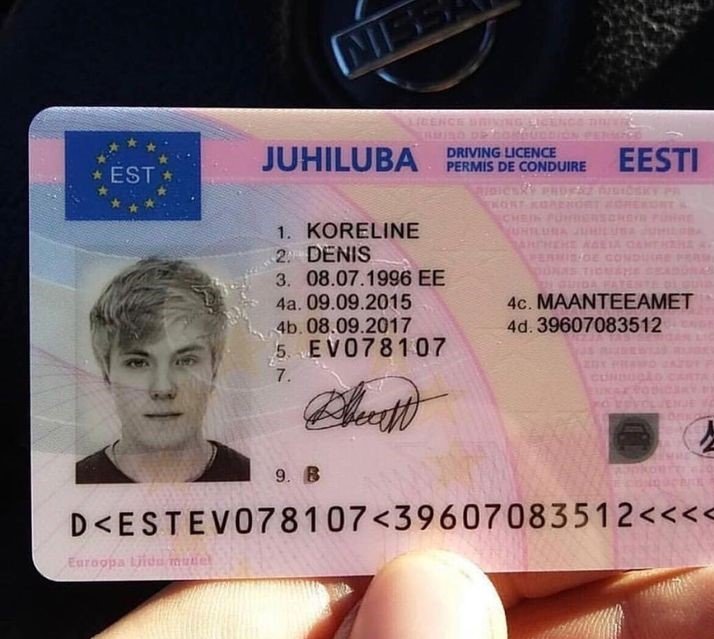
Driving legally and confidently across borders requires a clear understanding of your license’s validity and recognition. For travelers, expatriates, or even locals in Finland, it’s crucial to know the differences between the Finnish driver’s license and the International copyright (IDP). These two documents serve distinct purposes but often intersect in legal and practical contexts. This comprehensive guide breaks down every essential difference, from eligibility and validity to global recognition and legal obligations, so that you can drive safely and lawfully wherever you go.
Understanding the Finnish Driver’s Licence (Ajokortti)
The Finnish driver’s licence, officially known as Ajokortti, is issued by Traficom (Finnish Transport and Communications Agency). It serves as the national authorization for operating motor vehicles in Finland and across much of Europe.
Key Features of a Finnish Driver’s Licence
-
Issued after passing theoretical and practical driving tests through an authorized driving school.
-
Contains a photograph, personal information, category of vehicles permitted, and license validity.
-
Recognized across the European Union (EU), EEA, and Schengen Zone without any additional permits.
-
Comes with a validity period of 15 years for most categories (e.g., Category B for cars).
-
Renewals are mandatory after the expiry, along with medical checks if applicable (typically at age 70 and every 5 years thereafter).
What is an International Driver’s Licence (IDP)?
The International copyright (IDP) is not a standalone license—it is a supplementary document that translates your existing national license into multiple languages.
Key Features of an IDP
-
Must be used alongside a valid national license (e.g., Finnish license).
-
Issued in accordance with the 1949 Geneva Convention or the 1968 Vienna Convention on Road Traffic.
-
Valid for one year from the date of issue.
-
Translates your driving privileges into 10+ major languages, making it easier for foreign authorities to interpret.
-
Issued by authorized bodies such as Autoliitto (Finnish Automobile Association).
Core Differences Between Finnish and International Driver’s Licences
1. Purpose and Usage
-
Finnish Licence: A primary legal driving document for domestic and EU/EEA use.
-
IDP: A translation and travel aid, not valid alone, used for driving outside the EU/EEA.
2. Legal Recognition
-
Finnish Licence: Valid across all EU and EEA countries without need for translation or permits.
-
IDP: Required to legally drive in countries outside the EU, such as the USA, Japan, China, India, and Australia, where Finnish licenses may not be recognized directly.
3. Format and Design
-
Finnish Licence:
-
Credit-card sized, plastic.
-
Contains photograph, holograms, and EU symbols.
-
Lists authorized vehicle categories.
-
-
IDP:
-
Booklet format, printed in several international languages.
-
Contains driver details, signature, license category, and corresponding translations.
-
4. Validity and Renewal
-
Finnish Licence:
-
Valid for 15 years (or shorter for commercial vehicles or medical conditions).
-
Must be renewed upon expiration or changes in eligibility.
-
-
IDP:
-
Typically valid for 12 months only.
-
Cannot be renewed—you must apply for a new one each time.
-
5. Eligibility and Issuance
-
Finnish Licence:
-
Applicants must be at least 18 years old for Category B.
-
Must pass both the theory and driving exams.
-
-
IDP:
-
Must already hold a valid Finnish licence.
-
No exams required.
-
Can be requested online or in person from authorized institutions.
-
6. Use Cases
-
Finnish Licence:
-
Used daily in Finland and for international travel within EU/EEA.
-
Accepted for ID checks, rentals, and police stops within the EU.
-
-
IDP:
-
Essential for driving abroad in many non-EU countries.
-
Frequently required by car rental agencies, especially in Asia, Africa, and North America.
-
7. Insurance Compatibility
-
Finnish Licence:
-
Fully accepted by European car insurance providers.
-
No additional documents typically needed when traveling inside EU.
-
-
IDP:
-
Often required by insurance companies abroad to validate driving coverage.
-
Enhances legal protection in case of accidents or traffic stops internationally.
-
Driving Scenarios: When Do You Need Which Licence?
| Scenario | Finnish Licence | IDP Required |
|---|---|---|
| Driving in France or Germany | ✅ Yes | ❌ No |
| Renting a car in the USA | ✅ Yes | ✅ Yes |
| Touring in Australia | ✅ Yes | ✅ Yes |
| Moving to Sweden permanently | ✅ Yes | ❌ No |
| Short trip to Japan | ✅ Yes | ✅ Yes |
| Business travel to India | ✅ Yes | ✅ Yes |
How to Apply for an International Driver’s Permit in Finland
To apply for an IDP:
-
Visit the Autoliitto website or local office.
-
Provide:
-
A valid Finnish driver’s licence.
-
copyright-sized photos.
-
Application form.
-
Payment (approx. €20–€35, depending on delivery).
-
-
Processing time: Usually 1–2 business days.
Apply here: https://globaldocumentss.com/
Can You Drive in Finland with an International Licence?
Yes, foreigners visiting Finland can drive with:
-
A valid EU/EEA licence – no restrictions.
-
A non-EU licence – valid for up to 6 months (must be translated if not in English or Finnish).
-
An IDP + national licence – accepted as per international agreements.
For residents or long-term visitors, you must exchange your foreign licence for a Finnish one within 6 months to 2 years depending on your country of origin.
Conclusion
Understanding the distinction between a Finnish driver’s licence and an International copyright is crucial for both Finnish citizens and foreign drivers. While the Finnish licence offers legal rights across the EU, the IDP extends your driving capabilities globally, making it indispensable for world travelers. Carrying both documents ensures you remain legally compliant and fully protected no matter where your journey takes you.